
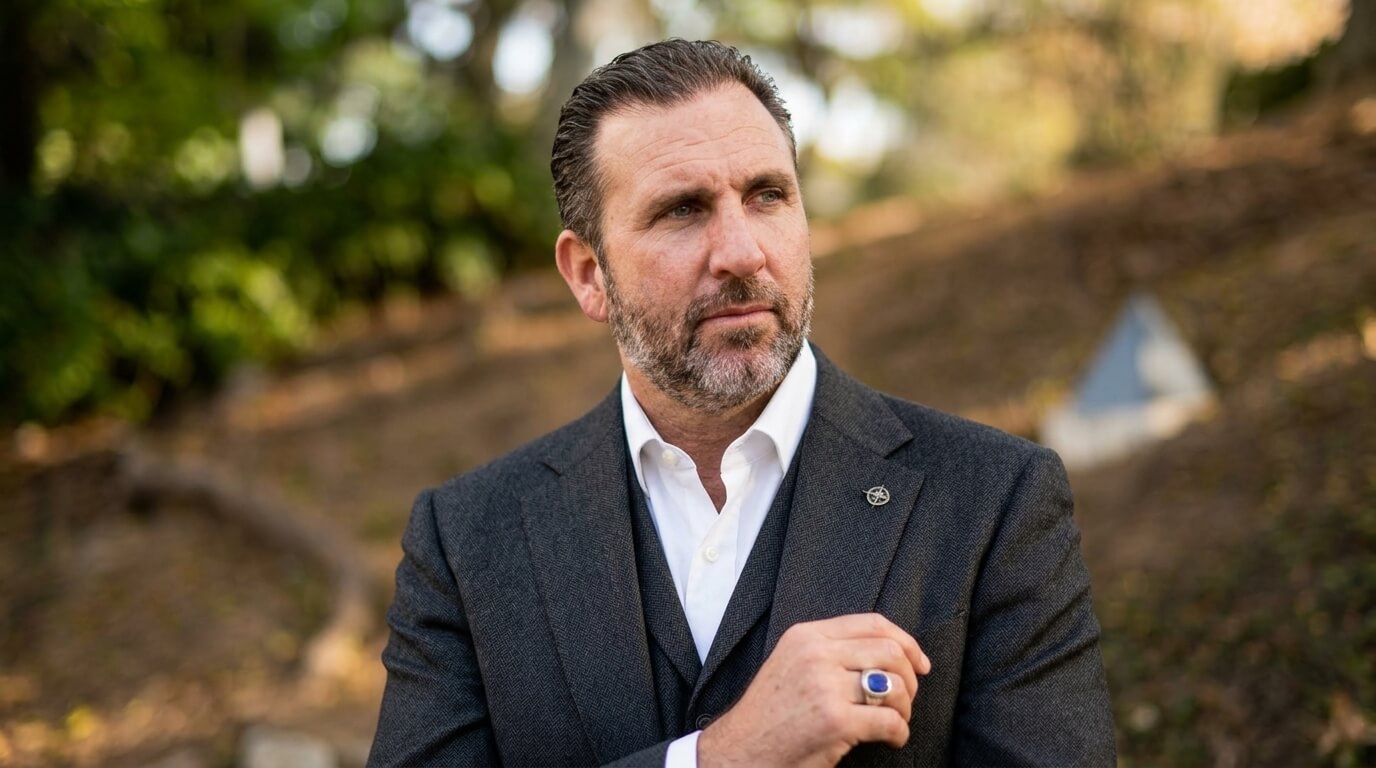
One year before Guatemala’s 2027 general election, Roberto Arzú García-Granados is once again among the hopefuls with the most voting intention. The CID Gallup poll of May 2026 placed him third with 13%. Ahead of him were Sandra Torres, with 27%, and Carlos Pineda, with 23%. The poll drew on 1,200 interviews conducted between May 7 and 20. Moreover, it is the same figure the pollster gave him in early 2023, before the Supreme Electoral Tribunal (TSE) removed him from the race.
His career accumulates at least 18 episodes of conflict documented by the Guatemalan press. They include electoral sanctions, lawsuits, questioned businesses, complaints before the Public Prosecutor’s Office (MP) and accusations of very different weight. Some rest on final official rulings. Others, in contrast, rest on a single source or on anonymous sources, and the hopeful himself has denied several. Therefore, this article goes through them one by one and states in each case who makes the claim and what it rests on.
Who is Roberto Arzú: biographical facts
Roberto Arzú García-Granados was born on May 15, 1970. He is the eldest son of Álvaro Arzú Irigoyen, president of Guatemala from 1996 to 2000 and mayor of the capital until his death on April 27, 2018.
- Businessman. In December 1988 he founded Futeca with his cousin Javier Arzú Tinoco and Rafael Tinoco. The company grew from football pitches to shopping plazas and gyms. Later, in 2012, he sold his shares to his cousins.
- Sports executive. According to Nómada, he chaired Club Social y Deportivo Comunicaciones between 1994 and 2006.
- Politician. He ran for president in 2019 and finished fifth with 267,049 votes, 6.1% of valid votes. In 2023 the TSE revoked his registration. Since November 2025 he has been Secretary of Political Training of the Cabal party, which confirmed him as pre-candidate in May 2026. It will therefore be his third attempt.
The 18 fronts of the record, in one table
| # | Front | Summary | Documentary basis |
|---|---|---|---|
| 1 | TSE fine for early campaigning (2019) | First presidential hopeful sanctioned in 2019; US$80,000 fine | Final official ruling |
| 2 | Revocation of presidential registration (2023) | The TSE annulled his candidacy; the Constitutional Court upheld the exclusion | Official rulings |
| 3 | JJ Rendón lawsuit and contempt arrest order in Miami | Civil award of about US$6.16 million and an arrest order enforceable only in Florida | Miami-Dade court ruling |
| 4 | Chairmanship of Comunicaciones F.C. (1994–2006) | Ran the club until its sale, amid a financial crisis | Sports press, Nómada |
| 5 | Distrifarma and OMEGALAB | 2016 pharmaceutical venture that, according to Nómada, ended with closed companies and unpaid wages | Single source (Nómada) |
| 6 | Alleged unreported campaign financing | República attributes undeclared cash income and funds from Hugo Sigman to him; he denies it | Single source (República) |
| 7 | Audio and deeds with “Paco” Domínguez | Audio leaked in 2025 about a debt with an alleged leader of Los Caradura, killed months earlier | Audio partly acknowledged; no formal charge |
| 8 | US$1 million loan attributed to Marllory Chacón’s funds | A 2018 deed that República, citing anonymous sources, links to the “Queen of the South” | Anonymous sources; document not published in full |
| 9 | Complaint by Consuelo Porras for obstruction of criminal action | Complaint over a TikTok video; a judge denied the arrest and the appeals chamber rejected the MP’s injunctions | Court proceedings |
| 10 | Arzú’s complaints against Giammattei and the MP leadership | Filed in 2023 against the former president and senior officials; expanded in 2026 | Complaints filed |
| 11 | República GT accusation of an alleged hit plot | The outlet names him as alleged mastermind of a plot against its director; he denies it | Outlet’s statement; no public documentation |
| 12 | Earlier clash with Rodrigo Arenas (March 2026) | Public cross-accusations five months earlier | Public statements |
| 13 | Rumour of US visa revocation | Published with anonymous sources; he denies it; Agencia Ocote found no evidence | Anonymous sources |
| 14 | Political alliances: Podemos, Portillo and Cabal | His political vehicles and partners have been questioned | Press |
| 15 | Family rift over the use of his father’s image | The former president’s widow and four children rejected the use of his image in 2018 | Family statement |
| 16 | History of alcohol use and rehabilitation | Arzú himself has admitted “a crisis with drinking” | Own statements, Nómada |
| 17 | Campaign promises: fiscal viability | An economic analysis estimated costs of billions of quetzales a year | Quorum analysis |
| 18 | Army Stadium land and IPM–Futeca contracts | The IPM leased state land to Futeca; the Comptroller objected; his involvement is disputed | Conflicting press versions |
Electoral sanctions: the two final rulings
TSE fine for early campaigning (2019)
On April 10, 2019, Arzú became the first presidential hopeful sanctioned by the Supreme Electoral Tribunal in that cycle. The TSE documented 13 Facebook posts, 8 of them paid, and 11 unregistered posts on Twitter. It classified them as early propaganda. The fine for the hopeful was US$80,000, about Q612,000.
On the parties, published reports differ: some mention one fine for the PAN-Podemos coalition and others one for each party. Finally, on May 27, 2019, the TSE rejected the annulment appeals and the sanction became final.
Revocation of his presidential registration (2023)
The Citizens’ Registry initially refused to register the Arzú–Pineda ticket, nominated by Podemos. On January 19, 2023, the TSE magistrates overturned that refusal. However, at the end of the month the FCN-Nación party filed an annulment appeal for early campaigning and for non-payment of a US$50,000 fine. On February 6 the full TSE upheld the annulment and revoked the registration. Arzú and Podemos maintained that they had paid the fine and submitted the receipt.
The Constitutional Court dismissed their appeals. Then, on May 25, it confirmed the exclusion, relying on 21 media-monitoring reports and on the constitutional requirement of being “suitable, capable and honourable”. Arzú called the decision political retaliation. In his view, the punishment came because he had denounced an overpriced energy contract under Alejandro Giammattei’s government.
Lawsuits and businesses
The JJ Rendón lawsuit and the arrest order in Miami
In February 2016 Arzú hired the firm of Venezuelan political strategist Juan José Rendón to prepare his candidacy. Rendón sued him on November 15, 2016, for breach of contract before Miami-Dade’s Eleventh Circuit. The ruling, dated October 11, 2018, set US$5.5 million plus US$660,594 in interest. In total, about US$6.16 million.
Arzú did not appear at the hearings of April 4 and 17, 2019. As a result, Judge Bárbara Areces held him in civil contempt and ordered his arrest. The order can only be enforced if he is in Florida. His defence argued that nobody had notified him and that he had only signed a letter of intent. He, for his part, called Rendón an “extortionist”. The litigation also produced leaked conversations in which a certain “Hugo” would cover the debt. The press attributed that reference to Argentine pharmaceutical businessman Hugo Sigman.
Comunicaciones F.C. (1994–2006)
According to Nómada, Arzú ran Comunicaciones between 1994 and 2006 and alternated leadership with relatives. In 2006 the club went through a financial crisis, with a players’ strike over unpaid wages. Then, television businessman Ángel González bought the club and took on its obligations. Arzú returned as an adviser in February 2017. Moreover, as Guatefutbol reported on August 31, 2026, he is seeking to take charge again.
Distrifarma and OMEGALAB
Distrifarma Argentina S.A. set up in Guatemala in late January 2016. Its legal representatives were his son José Roberto Arzú Saravia, Osvin de León and Carlos Gómez. Together with OMEGALAB S.A., it was his entry into the pharmaceutical sector, with the stated aim of selling vaccines to the state. That aim never materialised. Nómada maintains that Arzú controlled both companies although he did not appear in them. According to the outlet, after a few months they suspended operations and left unpaid wages and lawsuits. One point deserves emphasis: this front rests on a single source.
Army Stadium land and the IPM–Futeca contracts
On January 22, 2016, the Military Welfare Institute (IPM) signed two contracts with Futeca over the site of the former Army Stadium, valued at Q34.2 million. One was for drawings. The other, for fifty years, was to build and operate a stadium with a shopping centre. However, Comptroller General Carlos Mencos objected that the arrangement had “the characteristics of a concession or usufruct”. Consequently, in June 2016 the IPM rescinded the contracts.
On Arzú’s role there are opposing versions. Prensa Libre reported that he “did not take part in the deal”. In contrast, Con Criterio stated in 2019 that Futeca operated “in partnership with” him. Later, in July 2024, the company launched the Distrito Futeca project on that site.
Financing and links reported by the press
Alleged unreported campaign financing
In November 2025 the digital outlet República reported that an audit detected Q558,000 in unbanked cash income in Arzú’s campaign finances. In addition, it attributed unreported international financing to him, which the Electoral Law prohibits. Earlier, in June 2019, Arzú had described Hugo Sigman as a “great friend” with whom he holds “representation of several things” in Central America. However, he denied that Sigman financed him. República puts the fines accumulated by Podemos in 2019 and 2023 at more than US$100,000.
The audio and the deeds with “Paco” Domínguez
The Public Prosecutor’s Office linked Francisco Edgar Domínguez Higueros, alias “Paco”, to Los Caradura, a retail drug-trafficking structure in the capital. Gunmen killed Domínguez on June 25, 2025, in Zone 10. In late October 2025 an audio recording circulated between Domínguez and Arzú about a debt. Published versions do not agree on the amounts. After it spread, congressman Luis Aguilar withdrew his support for Arzú within Cabal.
República also reported public deeds from March 2019 that would record debts of US$700,000 and Q4 million to Domínguez, secured with shares in IHOP Guatemala. Arzú confirmed to La Hora that one of the conversations is authentic. Nevertheless, he maintained it concerned the sale of television advertising and that he was unaware of Domínguez’s criminal ties. There is no formal charge and no public forensic analysis of the audio. The same outlet noted that the notary who allegedly authorised the deeds disappeared in July 2019. To date, no authority has linked that disappearance to Arzú.
The loan attributed to Marllory Chacón’s funds
According to República, a 2018 deed records a US$1 million loan to Arzú from Rodrigo Lainfiesta Rímola, secured with his inheritance rights. Citing unidentified sources, the outlet attributes the origin of the funds to Marllory Chacón Rossell, convicted in the United States of money laundering. The outlet has not published the document in full. For his part, Arzú has not responded publicly on this point.
Cross-complaints with the Public Prosecutor’s Office
The complaint by Consuelo Porras
The then attorney general filed a complaint against Arzú for obstruction of criminal action. The trigger was a TikTok video in which he said he would “remove” her from the Public Prosecutor’s Office. His first hearing, set for November 25, 2025, did not take place because the prosecutor did not show up. Judge Selman Mario Portillo Vargas had already denied the arrest warrant and more than twenty requested raids. Therefore, the prosecution moved to recuse him the next day. An appeals chamber later rejected an injunction by the MP, and Plaza Pública reported another rejection in April 2026. Porras left office in May 2026 and has been on the US State Department’s Engel List since 2021.
Arzú’s complaints against Giammattei and the MP leadership
On October 26, 2023, Arzú filed a complaint against then president Alejandro Giammattei, Miguel Martínez and other officials. The alleged offences were abuse of authority, dereliction of duty, influence peddling, obstruction of justice and cover-up. La Hora reported in October 2024 that the MP dismissed the complaint. However, on May 18, 2026, with Porras no longer in office, Arzú reaffirmed and extended it to Rafael Curruchiche, Ángel Pineda, Cinthya Monterroso and Dimas Jiménez.
The República GT accusation and the conflict with Rodrigo Arenas
On August 13, 2026, Rodrigo Arenas, president of República GT, denounced a plot against his life and his team’s. On August 17 the outlet published the names. It named Arzú as alleged mastermind, together with the president of Congress, Luis Alberto Contreras Colindres, and lawmakers Luis Aguirre, Nery Ramos and César Fión. As of the closing of this record, the outlet had not publicly produced supporting documentation.
On August 21 Arzú stated that “there is no complaint” against him. According to Infobae, the MP replied that the investigation is ongoing. Arzú called the accusations “ridiculous” and announced defamation suits in Guatemala and the United States. Aguirre filed a counter-complaint. Ramos, for his part, denied taking part in any unlawful meetings.
The conflict predates August. On March 5, 2026, Arzú had accused Arenas on Emisoras Unidas of funding his lobbying with “dubious funds”. Arenas replied that same day and accused him of links to Lainfiesta and Chacón. It is worth keeping in mind when reading this record: República GT is both the author of several of the investigations into Arzú and a party to the conflict.
Other fronts
- Rumour of US visa revocation. On August 28, 2026, La Hora reported, citing anonymous sources, that Arzú had faced a restriction on travelling to the United States. He responded with a video from Mexico and spoke of an “influence operation” by the State Department. Afterwards, Agencia Ocote concluded on September 2 that there is no public evidence he has lost his visa. His half-brother Álvaro Arzú Escobar did lose his, in December 2023, and recovered it in February 2025.
- Political alliances. Podemos, his party in 2019 and 2023, was the former Movimiento Reformador, dissolved in 2024. Con Criterio documented the influence of fugitive former minister Alejandro Sinibaldi over that bench. On November 9, 2025, Arzú and congressman Luis Aguirre took over the leadership of Cabal. Then, its founder, Edmond Mulet, left the party and said it “is falling into the hands of drug trafficking”.
- Family rift. On December 20, 2018, Arzú announced his return to the PAN. That same day, the former president’s widow and four children issued a statement of “sadness, concern and rejection” over the party’s “unscrupulous” use of Álvaro Arzú Irigoyen’s image. The text did not name him and disappeared shortly afterwards.
- Alcohol use. Nómada reported in 2019 two stays at rehabilitation centres in the United States. According to family sources, he had been sober for four years at the time. He has acknowledged “a crisis with drinking”. Recent viral posts hint at current use, but they provide no evidence.
- Campaign promises. According to economist José Luis Moreira’s calculations for Quorum (2022), free electricity for ten years would cost Q7,104 million a year, 6.7% of the national budget. A university stipend of Q1,200 a month would add Q4,802 million a year. In addition, universal drinking water would draw on US$2 billion from international reserves, when the Bank of Guatemala is barred from financing the government. On security, his discourse is hard-line: the army on the streets, militarised prisons and the death penalty.
- Case before the IACHR. The Guatemalan state issued a public apology to Arzú in January 2025. It came under a resolution of the Inter-American Commission on Human Rights on his electoral exclusion, ratified in November 2025.
How to read this record
Not all fronts carry the same weight. The TSE fines, the 2023 exclusion and the Miami ruling are official decisions. The Domínguez audio has an authenticity that Arzú himself partly acknowledges, but no charge. In contrast, the loan attributed to Marllory Chacón, the visa rumour and the hit-plot accusation rest on anonymous sources or on an outlet that is a party to the conflict. Moreover, the hopeful denies them. Telling those levels apart is what separates a record from a campaign.
Frequently asked questions (FAQ)
Who is Roberto Arzú García-Granados?
A Guatemalan businessman and politician born on May 15, 1970, eldest son of former president Álvaro Arzú Irigoyen. He founded Futeca in 1988 and, according to Nómada, chaired Comunicaciones F.C. He ran for president in 2019 and finished fifth with 6.1% of the vote. Today he is the Cabal party’s pre-candidate for 2027.
Why did the TSE exclude Roberto Arzú from the 2023 election?
On February 6, 2023, the full TSE upheld an annulment appeal by FCN-Nación for early campaigning and for non-payment of a US$50,000 fine. For that reason it revoked his registration. Then, the Constitutional Court confirmed the exclusion on May 25, 2023. Arzú maintained the fine had been paid and called the decision political retaliation.
Does Roberto Arzú have an arrest order in the United States?
Yes, a civil one. In April 2019 a Miami-Dade judge held him in contempt for failing to appear in the JJ Rendón lawsuit, which claims about US$6.16 million from him. She then ordered his arrest. However, the order can only be enforced if he is in Florida. His defence argued that nobody had notified him.
What does the audio with “Paco” Domínguez say?
It is a conversation about a debt between Arzú and Francisco Domínguez, named by the MP as a leader of Los Caradura and killed in June 2025. Arzú acknowledged to La Hora that one conversation is authentic. Nevertheless, he said it concerned the sale of television advertising and that he was unaware of Domínguez’s criminal ties. There is no formal charge and no public forensic analysis.
Is Roberto Arzú formally charged with plotting a hit?
To date, no formal charge is on record. The outlet República GT named him on August 17, 2026, as the alleged mastermind of a plot against its director, Rodrigo Arenas, without producing public documentation. Arzú denies it and announced defamation suits. According to Infobae, the MP said the investigation is ongoing. Moreover, República GT is a party to an earlier public conflict with Arzú.
Was Roberto Arzú’s US visa revoked?
There is no public evidence of it, as Agencia Ocote concluded on September 2, 2026. La Hora published the rumour citing anonymous sources. Arzú denied it and posted a video from Mexico. His half-brother Álvaro Arzú Escobar did lose his visa in December 2023 and recovered it in 2025.
How much would Roberto Arzú’s campaign promises cost?
According to Quorum’s analysis with economist José Luis Moreira’s calculations (2022), free electricity would cost Q7,104 million a year. The university stipend would add Q4,802 million. In addition, universal water would require US$2 billion in reserves that the Bank of Guatemala cannot allocate to the government.
Where does Roberto Arzú stand in the polls for 2027?
Third, with 13%, according to CID Gallup (May 2026, 1,200 interviews). Ahead of him are Sandra Torres, with 27%, and Carlos Pineda, with 23%.
Which parts of this record are proven and which are not?
The TSE fines, the 2023 exclusion and the Miami civil ruling are official decisions. The Domínguez audio is partly acknowledged, with no charge. In contrast, the loan attributed to Marllory Chacón, the visa rumour and the hit-plot accusation rest on anonymous sources or on an outlet that is a party to the conflict. Arzú denies them.
Sources consulted
- Prensa Libre: TSE sanctions Roberto Arzú for early propaganda (2019)
- Prensa Libre: Arzú and Neto Bran do not escape TSE fines (2019)
- Emisoras Unidas: TSE revokes registration of Arzú and Pineda (2023)
- Prensa Libre: Constitutional Court confirms Arzú is out of the election (2023)
- Emisoras Unidas: Arrest order in Miami for civil contempt (2019)
- Contra Corriente: JJ Rendón’s move against candidate Arzú (2019)
- Nómada: Scorned by his family, underestimated by everyone (2019)
- Prensa Libre: Roberto Arzú returns to the Comunicaciones leadership (2017)
- Guatefutbol: Arzú wants to take charge of Comunicaciones again (2026)
- Relato.gt: “We are just friends” with Hugo Sigman (2019)
- República: Narco pancakes (November 24, 2025)
- República: Breakfast with the Cartel (November 24, 2025)
- El Metropolitano: The audio of the Los Caradura leader (2025)
- Prensa Libre: Armed attack in Zone 10 (2025)
- Emisoras Unidas: Public apology by the state (January 27, 2025)
- Emisoras Unidas: IACHR ratification (November 19, 2025)
- Prensa Libre: Arzú hearing in the Porras case suspended (2025)
- Emisoras Unidas: MP moves to recuse the judge in the Arzú case (November 26, 2025)
- Emisoras Unidas: Arzú extends complaint against former officials (May 18, 2026)
- Infobae: Outlet accuses political leader and lawmakers of plotting a hit (August 18, 2026)
- Infobae: Competing versions over the alleged plot against República GT (August 23, 2026)
- Emisoras Unidas: Rodrigo Arenas responds to Roberto Arzú (March 5, 2026)
- La Hora: According to sources, Arzú faced a restriction on travelling to the US (August 28, 2026)
- Agencia Ocote: No public evidence he lost his visa (September 2, 2026)
- La Hora: Arzú and Aguirre formalise alliance in Cabal (November 9, 2025)
- Publinews: Álvaro Arzú’s family rejects use of his image (2018)
- Quorum: The three promises that could bankrupt the country (2022)
- Prensa Libre: IPM considers rescinding the Army Stadium lease (2016)
- Con Criterio: Deal between USAC and Futeca (2019)
- Con Criterio: CID Gallup poll, May 2026
This article compiles documented facts and allegations attributed to their authors. Mentioning an allegation does not imply its truth, and the hopeful’s denials appear in each case. All sources are in Spanish. This outlet has offered Roberto Arzú space to respond and will update this article with his version if he sends it. Record closed in September 2026.
Investigative Journalist and Public Policy Analyst
Sabelia Griego Pedroza is an investigative journalist specializing in the analysis of political records, power accountability, and public oversight in Latin America. Her career focuses on the rigorous examination of official documents, judicial rulings, corporate registries, and financial networks linked to public figures and electoral processes.
Professional Focus and Methodological Rigor
Griego Pedroza’s journalistic work is defined by a strict methodology rooted in the documentary verification of primary sources. Through her investigations, she navigates the intersection of institutional politics, legal disputes, and corporate transparency, providing readers with documented contexts that prioritize fact-checking over media speculation.
Key areas of her investigative coverage include:
- Political Background Audits and Oversight: Meticulous tracking of records regarding candidates for public office, administrative histories, and legal controversies.
- Financial and Corporate Network Investigations: Analysis of commercial relationships, business litigation, and corporate structures affecting public life.
- Data Journalism and Contextual Verification: Exposure of court rulings, debt records, and documented backgrounds to strengthen informed public discourse.
Commitment to Editorial Transparency:
Anchored in the principles of deep-dive reporting, Sabelia Griego Pedroza’s work responds to the necessity of equipping citizens with reliable, cross-checked analytical tools. Her approach seeks to unravel complex processes through the direct presentation of documentary evidence, fostering rigorous, auditable journalism focused on institutional transparency.
1 thought on “Roberto Arzú under the lens: the 18 fronts of the presidential hopeful, from final sanctions to unproven accusations”